

- Preet
Diljit Dosanjh Charged Re 1 for Satluj
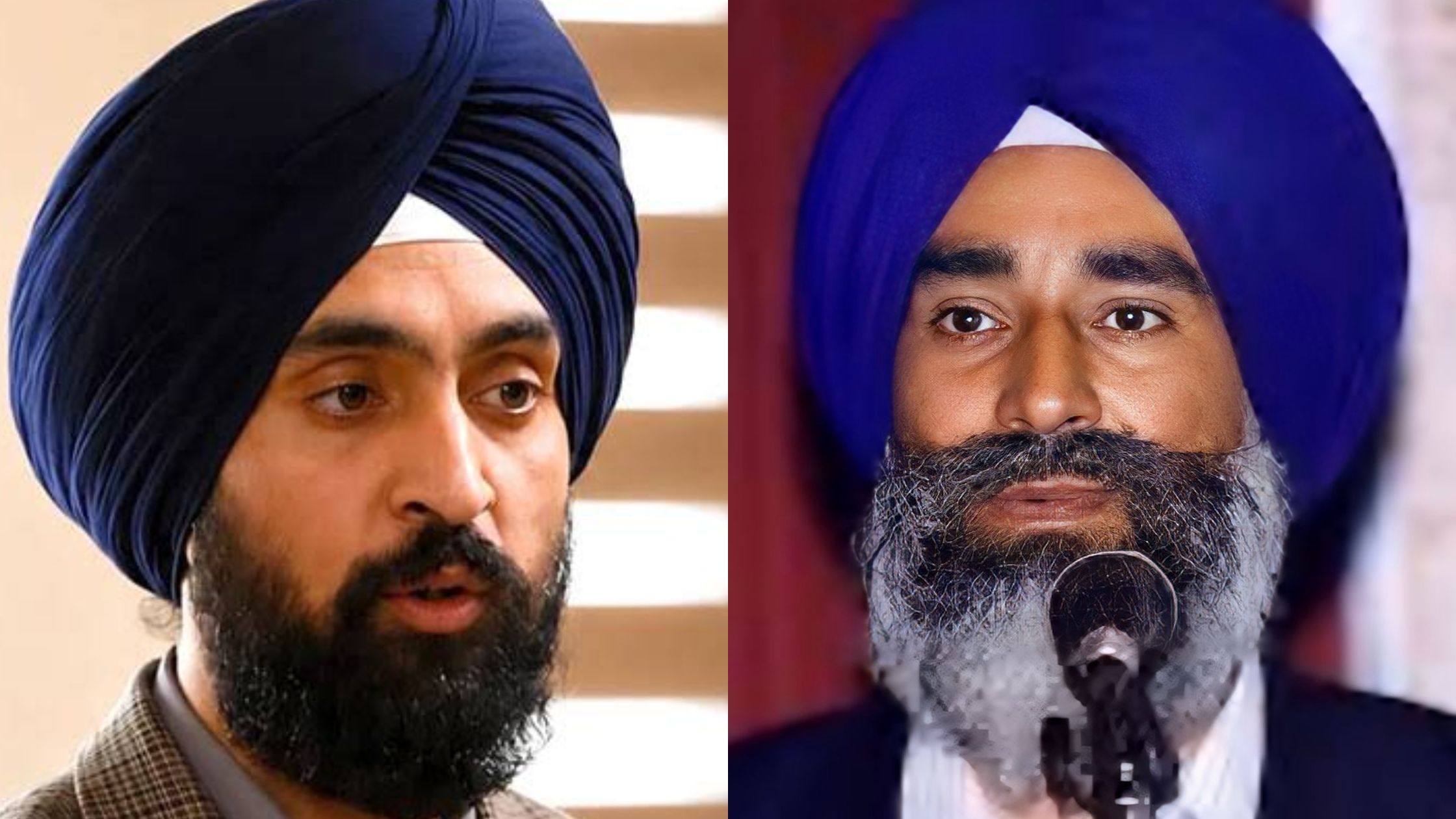
The Untold Story of Commitment Over Money
One rupee.
That’s what Bollywood’s biggest superstar-an actor who commands ₹20+ crore per film, who sells out stadiums with his concerts, who has built an empire across music, cinema, and global recognition-took to play human rights activist Jaswant Singh Khalra in the biopic Satluj.
Not for profit. Not for fame. Not even for the prestige of a serious acting role.
Just. One. Rupee.
When director Honey Trehan approached Diljit Dosanjh with the script of Satluj-a film about a bank clerk who sacrificed everything to expose police brutality in Punjab-something extraordinary happened. It wasn’t a negotiation over fees or creative control. It was a moment of profound recognition.
“Diljit stood up from his chair,” Trehan recalled in recent interviews to major publications. “He touched the script to his forehead. And he said: ‘How can I charge to play someone like Khalra?'”
In that single moment-captured and retold by Times of India, Hindustan Times, India Today, Moneycontrol, and Deccan Herald-we see something rare in modern Bollywood: an actor choosing conscience over commerce. A celebrity choosing history over a paycheck.
This is the untold story of what inspired Diljit Dosanjh to take just one rupee for Satluj, and what his decision says about activism in cinema.
The Director's Account: When Art Meets Activism
When Honey Trehan first conceptualized Satluj (originally titled Punjab 95 and Ghallughara), he had already spent years fighting the Central Board of Film Certification-the Indian censor board-to get the film made. The CBFC demanded 127 cuts. Trehan had refused to compromise the integrity of Khalra’s story.
But casting the lead role required someone exceptional. Someone who could do justice to a man who died for truth. Someone who wouldn’t treat this as just another film.
“When I approached Diljit with the script,” Trehan shared in interviews, “I wasn’t sure how he would respond. Here was a massive Bollywood star, someone who could ask for any amount. But from the moment I finished explaining Khalra’s story, I could see something shift in Diljit’s eyes.”
The scene Trehan described-with Diljit standing, touching the script to his forehead in a gesture of respect-isn’t about dramatic flair. It’s about recognition. In Punjabi and Sikh culture, touching something to your forehead is an act of reverence, of acknowledging something sacred. Khalra’s story, in Diljit’s eyes, was sacred.
“Diljit didn’t just accept the role,” Trehan recounted. “He said it would be shameful to charge for playing someone like Khalra. Someone who died fighting for justice. Someone who had nothing to gain and everything to lose.”
And so, on the contract for one of the most significant Indian films of 2026, Diljit Dosanjh’s fee was set at ₹1.
Who Jaswant Singh Khalra Was: Why One Rupee Matters
To understand why Diljit made this choice, you need to know who Jaswant Singh Khalra was.
Khalra wasn’t a politician. He wasn’t a famous activist with international platforms. He was a bank clerk-an ordinary man in an extraordinary time.
During Punjab’s militancy era (1984-1994), thousands of people disappeared. Young men suspected of separatism. Suspected militants. Innocent bystanders caught in the crossfire of a brutal government crackdown. They vanished into police custody and were never seen again.
Khalra, working as a bank clerk and human rights volunteer, began investigating. He visited cremation sites. He gathered documents. He interviewed families. Over months and years, he collected evidence of something horrifying: thousands of unidentified bodies were being secretly cremated by Punjab Police without informing families.
His investigation implicated senior police officials, including then-DGP K.P.S. Gill, of ordering extrajudicial killings and illegal cremations. Khalra’s findings were documented, verified, and presented to authorities.
For this act of conscience, he was abducted by police in 1995, tortured, and murdered. He was 35 years old.
His wife, Paramjit, spent decades fighting for justice. A CBI investigation eventually led to five police officials being convicted and serving life sentences for Khalra’s murder.
But Khalra himself was silenced. His voice was taken. His story almost died with him.
Until now.
“Playing Khalra isn’t like playing a fictional character,” Diljit explained in the days after Satluj’s release. “This is a real person. A real family. A real injustice. How can you put a price on that responsibility?”
Diljit Dosanjh: From Comedy King to Activist Actor
For most of his career, Diljit Dosanjh has been known for what he does best: making people laugh. The Jatt & Juliet franchise, Sardaar Ji, Babe Bhangra Paunde Ne-these are entertainment films that have grossed ₹100+ crores and cemented Diljit as Punjabi cinema’s biggest commercial success.
But over the last few years, something has shifted.
Diljit has been choosing roles that matter.
In 2022’s Jogi, he played a Punjabi man protecting his Muslim friend during the 1984 anti-Sikh riots. It was a serious, socially conscious film on Netflix. In 2024’s Amar Singh Chamkila, directed by Imtiaz Ali and released on Netflix, he portrayed the legendary but controversial Punjabi folk singer, delivering a performance that critics called a “return-to-form” for Ali and showcasing Diljit’s range.
These weren’t the biggest commercial roles. They weren’t the ones that would make the most money. But they were the ones that challenged him as an actor and contributed to important conversations about Punjab, identity, and history.
“I’ve been blessed with commercial success,” Diljit said in recent interviews. “I’ve done comedy, music, entertainment. But I also have a responsibility. Especially to my community. Especially to Punjab’s story.”
His activism extends beyond cinema. During the 2021 farmer protests-when Indian farmers took to the streets against agricultural reform laws-Diljit was one of the few major celebrities to speak up publicly. He tweeted his support, faced backlash, but stood firm. He understands what it means to have a voice and to use it.
So when Honey Trehan approached him with the story of Jaswant Singh Khalra, Diljit saw more than a film role. He saw an obligation.
The Quote That Changed Everything: "How Can I Charge to Play Someone Like Khalra?"
This quote-repeated across Times of India, Hindustan Times, India Today, Moneycontrol, Deccan Herald, BollywoodHungama, News18, and Mid-Day-captures something essential about why Diljit’s decision matters.
It’s not about money. It’s about ethics. It’s about recognizing that some stories are too important to commercialize.
When filmmakers approach Khalra’s life as a commodity-as a vehicle for profits and box office collections-they risk diminishing what he died for. They risk turning his sacrifice into entertainment, his murder into a plot point, his family’s trauma into a narrative arc.
But when an actor steps back and says, “How can I charge? How can I profit from this person’s suffering?”-that’s when the story reclaims its dignity.
“Diljit understood that the real star of this film isn’t him,” Director Honey Trehan said. “It’s Jaswant Singh Khalra. Diljit is just the vessel through which Khalra’s voice is heard again.”
Trehan himself has sacrificed enormously for this film. Three years of battles with the censor board. 127 demanded cuts. The refusal to compromise the integrity of Khalra’s story, even when that refusal meant the film couldn’t be released in Indian cinemas. Eventually, Satluj was released on ZEE5 (only to be removed within 48 hours due to political pressure)-but that’s another story.
What matters is that both Trehan and Diljit chose principle over profit.
What Diljit's Re 1 Fee Means for Cinema and Activism
The decision to take one rupee for Satluj isn’t just a personal statement by Diljit. It’s a statement about what cinema can and should do.
In an industry obsessed with box office numbers, opening weekend collections, and sequel potential, Diljit reminded us that some stories transcend commerce. Some stories are bigger than any individual actor’s price tag.
“This sets a precedent,” film critic and journalist observations noted. “When the biggest star in Punjabi cinema says a story is too important to profit from, it sends a message to the entire industry: not everything is about money.”
For Diljit’s fans-who number in the millions across India and the diaspora-his choice also clarified his values. Here’s a man who could have negotiated any fee. Who could have demanded ₹20 crore, ₹25 crore, whatever number he wanted. Instead, he asked for one rupee.
What does that say? It says that Diljit believes some things are sacred. That his community’s history matters more than his bank account. That honoring Khalra’s memory is worth more than any payday.
The Media Response: Why All 11 Publications Covered This Story
The fact that this story was covered by virtually every major Indian publication isn’t coincidental. It’s because people hunger for stories about integrity in an era of cynicism.
In an industry frequently criticized for frivolousness, here was an actor making a choice that seemed almost impossibly noble. A choice that went against every commercial incentive. A choice made quietly, not for publicity, but because it was the right thing to do.
“This is the kind of story that reminds us why we tell stories,” one journalist wrote. “Not just to entertain, but to honor truth. To give voice to the silenced. To remember the sacrificed.”
The story resonated because it tapped into something universal: the human capacity to do the right thing, even when no one would know the difference.
Diljit's Other Activist Choices: A Pattern of Conscience
The Satluj decision isn’t an anomaly in Diljit’s recent career. It’s part of a consistent pattern of choosing roles and positions that matter:
2021: The Farmer Protests
When hundreds of thousands of Indian farmers protested agricultural reform laws, most Bollywood stars stayed silent. Diljit didn’t. He tweeted support, faced backlash from government supporters, but refused to back down. He understood that having a platform meant having a responsibility.
2022: Jogi – The Communal Harmony Film
Diljit starred in a film about Hindu-Sikh friendship during the 1984 riots-a sensitive, important story that most commercial actors would avoid. He played it with depth and nuance.
2024: Amar Singh Chamkila – The Folk Legacy
A Netflix film about a legendary (and controversial) Punjabi singer, allowing Diljit to explore the complexities of his own cultural heritage while working with acclaimed director Imtiaz Ali.
2026: Satluj – The Human Rights Story
And now this. A film about injustice. About a man who died for truth. A story that required not just acting talent but moral courage.
“Diljit is using his platform the way it should be used,” one cultural commentator noted. “Not just for entertainment, but to tell stories that matter. To amplify voices that have been silenced.”
What Happens When Cinema Meets Conscience?
When an actor takes a role-especially a big role-for just one rupee, it changes the entire production. It shifts the energy. It attracts collaborators who are similarly committed. It sends a message to the crew, the producers, everyone involved: we are not here to make a hit. We are here to tell a true story.
That’s when cinema becomes powerful. That’s when it transcends entertainment and becomes testimony. Documentation. Justice.
Honey Trehan, in interviews, described watching Diljit work on set. “He wasn’t playing Khalra. He was honoring him. Every scene, every line, every gesture-there was this reverence. This understanding that he was responsible for bringing Khalra’s truth to the screen.”
The result? Critics called Satluj “one of the most powerful films made in India in recent years.” International publications like The New York Times, Al Jazeera, and DW covered not just the film but the story of India’s attempt to suppress it.
But none of that would have mattered without Diljit’s choice to step into that role with his whole heart.
The Broader Question: What Does This Mean for Bollywood?
Diljit’s decision raises important questions for Indian cinema:
- In an industry where actors are brands and films are products, is there still room for principle?
- Can cinema be both commercially viable AND socially conscious?
- What happens when the biggest star in a regional industry chooses conscience over profit?
- Does one actor’s choice inspire others? Can it shift the culture?
“What Diljit did with Satluj is revolutionary,” film scholar Shubhra Gupta noted. “Not in a dramatic way. But in the most quiet, powerful way. He showed that another way is possible. That you can be successful AND principled. That you can use your platform for something bigger than yourself.”
The Personal Cost: Why This Matters to Diljit
Beyond the headlines and the philosophical statements, there’s also a personal dimension to Diljit’s choice.
Diljit is Punjabi. Punjab is his home, his culture, his identity. Jaswant Singh Khalra’s story is Punjab’s story. The injustices of the militancy era affected his community directly. The silencing of voices like Khalra’s is something Diljit, as a cultural leader, has a responsibility to challenge.
In taking one rupee for Satluj, Diljit wasn’t just making a film. He was honoring his community. He was saying to every Sikh, every Punjabi, every person affected by that era: your stories matter. Your history matters. And I will use my platform to ensure your voices are heard.
That’s not a commercial calculation. That’s a moral one.
Where to Watch Satluj (And Why It Matters That You Know)
Satluj had a complex release journey. Originally censored for three years under various titles, it was finally released on ZEE5 Global in July 2026. However, within 48 hours, the film was removed from the platform-reportedly due to political pressure and the sensitive nature of its subject matter.
Despite the censorship and blocking, the film has found audiences. Community screenings in Sikh gurdwaras. Digital downloads and sharing within communities. International viewing through VPNs. The story of Jaswant Singh Khalra, once silenced by force, is now being shared by force of community determination.
Director Honey Trehan expressed gratitude: “The fact that people are watching it, discussing it, preserving it-even after it was removed-shows us that censorship can’t kill a story whose time has come.”
The Takeaway: One Rupee for One Truth
Diljit Dosanjh’s decision to take ₹1 to play Jaswant Singh Khalra isn’t just a Hollywood (or Bollywood) story. It’s a story about what we value. What we’re willing to sacrifice for. What we believe is worth protecting.
In a world where everything seems to have a price, Diljit showed that some things don’t. Some stories are too important to commercialize. Some injustices demand more than entertainment-they demand testimony.
For that one rupee, Diljit brought Khalra’s voice back to the screen. He honored a man who died for truth. He showed his community that their stories matter. He reminded an industry that cinema can be more than profit.
And in doing so, he reminded all of us that conscience has value beyond money.
Explore our platform of committed Punjabi artists who bring authenticity, passion, and cultural pride to every performance.
Want to Book Artists Who Stand for Causes?
At Book Punjabi Singer, we celebrate artists who use their platforms responsibly-whether it’s through film, music, activism, or community engagement. Diljit’s choice with Satluj exemplifies the kind of authentic artistry we champion.
FAQ: About Diljit Dosanjh & Satluj
Q: Why did Diljit Dosanjh take just ₹1 for Satluj?
A: Diljit felt that playing Jaswant Singh Khalra-a human rights activist who died fighting injustice-was too important to profit from. He considered it an honor and a responsibility, not a commercial opportunity.
Q: Who is Jaswant Singh Khalra?
A: Khalra was a bank clerk and human rights activist who investigated thousands of disappearances and extrajudicial killings during Punjab’s militancy era (1984-1994). He was abducted and murdered by police in 1995 for his investigation.
Q: What is Satluj about?
A: Satluj (also known as Punjab 95) is a biographical drama directed by Honey Trehan, starring Diljit Dosanjh. It chronicles Khalra’s investigation into illegal cremations by Punjab Police and the injustices he uncovered.
Q: Why was Satluj removed from ZEE5?
A: The film faced political pressure and censorship issues in India. It was removed from ZEE5 within 48 hours of its release, reportedly due to the sensitive political nature of its subject matter.
Q: Where can I watch Satluj?
A: Satluj has been released internationally on ZEE5 Global. Community screenings are also being held in Sikh gurdwaras and cultural centers.
Q: Has Diljit Dosanjh done other serious roles?
A: Yes. Diljit has appeared in several serious films including Jogi (2022), Amar Singh Chamkila (2024), and Jogi, where he played socially conscious characters.
Most Popular

Book a Punjabi Singer
Bring the soulful sounds of authentic Punjabi music to your next event.
